Water Resource Conservation
Policy and Basic Approach Based on the principle of “recognizing our dependence on the benefits provided by nature and coexisting with local communities and the environment,” the Gunze Group is committed to the sustainable use of water resources. Water plays an essential role in a wide range of our business activities, including fiber processing in the Apparel Business. At our production sites, we have established voluntary standards that are stricter than applicable environmental laws and local regulations and rigorously manage wastewater quality and prevent water pollution, with the aim of coexisting with local communities that share the same water resources. We also promote the efficient use and recycling of water according to the geographic characteristics and water consumption of each site and continuously implement improvement initiatives to ensure the sustainable use of water resources.
Water Risk Evaluation
To assess risks associated with the water resources used at our production sites from multiple perspectives, we conduct water risk assessments of the locations of our major manufacturing sites using the Aqueduct Water Risk Atlas provided by the World Resources Institute (WRI), an international environmental NGO. The assessment confirmed that sites located in areas with high water risk accounted for 7.2% of the Group’s total water withdrawal in fiscal 2024.
To address these risks, we will continue our existing water management practices while also rolling out across the Group the technologies and management methods for reducing environmental impact that have been established at our key sites in Japan. Through these efforts, we aim to ensure the sustainable use of water resources over the long term and maintain and further enhance our water management systems at all sites, including those located in areas with high water risk.
Initiatives
Case Study: Improving Textile Dyeing Technology in the Apparel Field
The dyeing process for fibers used in underwear, stockings, and sewing thread consumes large amounts of water and energy to impart color and texture.
By introducing and establishing new dyeing technologies, we have significantly reduced water usage and energy consumption per product manufactured, achieving a
permanent reduction in environmental impact.
This improved dyeing technology is steadily applied to new materials and colors planned each year, continuously advancing environmental impact reduction.
Case Study: Water Resource Recycling in the Plastic Film Sector
At the Moriyama Plant (Moriyama City, Shiga Prefecture), a core facility in the plastic film sector converted to a Circular Factory® (resource-recycling
factory) in 2023, the proximity to Lake Biwa is leveraged to utilize abundant groundwater for machine cooling and air conditioning.
After use, the warmed groundwater is also utilized as an auxiliary heat source for heating. It is then returned to the ground at a lower temperature. This
approach ensures limited water resources are not wasted and contributes to sustainable production activities that consider the local environment.
Collaboration with external parties
Participation in Regional Environmental Conservation Activities
Our group supports environmental conservation activities conducted by government agencies and NGOs, and actively participates in water source conservation efforts
near our facilities.
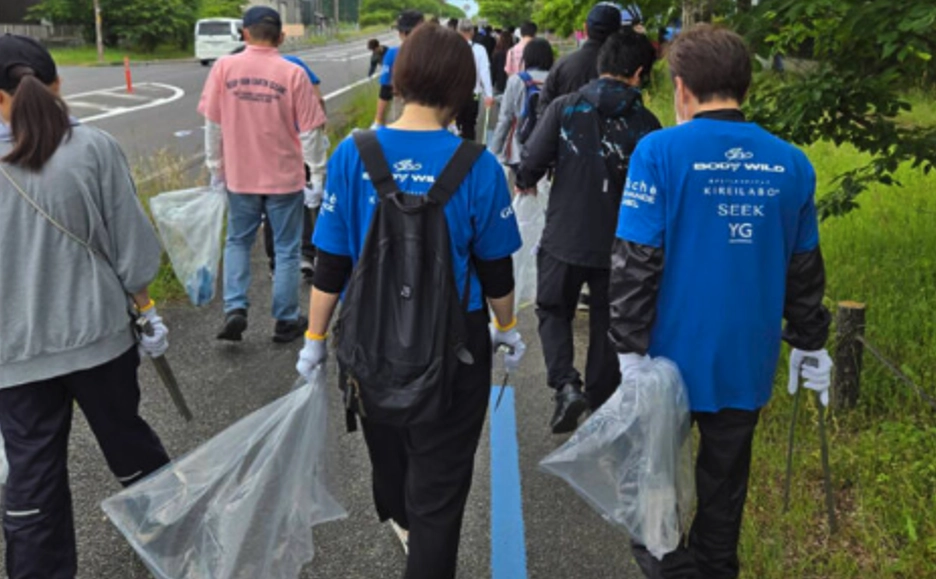
Examples include participating in and assisting with cleanup activities at Lake Biwa and Amanohashidate.
Participation in the “Zero Waste Operation” The “Zero Waste (530) Operation” was held at Kihama Lakeshore in Moriyama City, with participation from citizen groups, neighborhood associations, and Gunze.