Advancing Manufactured Capital to Strengthen the Foundation for Sustainable Growth
Manufactured Capital Supporting a Changing Business Environment
As Gunze marks its 130th anniversary, it has built on manufacturing technologies and frontline capabilities cultivated over many years to provide a stable supply of high-quality products across a diverse range of businesses, including plastic films, engineering plastics, medical, and apparel. One of our key strengths is that, starting from customer and market needs, we have continuously accumulated and advanced our core technologies in-house through repeated verification and improvement across the entire process, from product development and mass production to equipment upgrades. We also handle the equipment required for mass production in-house, from the conceptual stage through design and installation. This enables us to optimize technologies and equipment together, and we have established a framework for rapidly commercializing highly distinctive products.
At the same time, the environment surrounding manufacturing has changed dramatically in recent years. Structural challenges that cannot be adequately addressed simply by extending conventional approaches have become increasingly apparent, including severe labor shortages in Japan and overseas, rising raw material and energy prices, supply chain instability due to geopolitical risks, and increasingly stringent environmental regulations worldwide. Customer requirements are also becoming more sophisticated and multifaceted. In addition to conventional expectations for quality, price, and delivery, customers increasingly demand environmental considerations, stable supply in the event of unforeseen circumstances, and the ability to bring products to market quickly. To respond to these changes, the Gunze Group shares technologies and expertise accumulated at individual businesses and plants across the Company and deploys them horizontally to raise overall manufacturing capabilities. At the same time, through innovation in manufacturing processes, we are building a resilient manufacturing foundation that can respond effectively to change, thereby improving profitability and creating value.
Manufacturing Process Innovation under VISION 2030 stage2
Under the Medium-term Management Plan VISION 2030 stage2, which looks ahead to 2030, we have positioned the three years from fiscal 2025 through fiscal 2027 as a period for transforming Gunze into a company capable of sustainable growth. To realize the basic concept of “building a sustainable business foundation to remain a company of choice around the world,” strengthening manufactured capital is an important foundation for expanding growth businesses and improving the profitability of existing businesses. In fiscal 2026, the second year of stage2, we have positioned “strengthening global competitiveness and technologies” as one of our key themes. We see this as a phase in which we will further accelerate the implementation of manufacturing process innovation to enhance quality, cost competitiveness, and supply capabilities. Going forward, we will strengthen production systems in alignment with the strategies of each business, make effective capital investments, and reform processes to reduce costs. We will also improve productivity through automation and labor-saving measures, transform operations through the use of DX and AI, and promote resource circulation through the development of environmental technologies. Through these initiatives, we will pursue both environmental responsiveness and higher profitability while building a resilient, capital-efficient manufacturing foundation.
Structure and Focus Areas of the Technology & Development Department
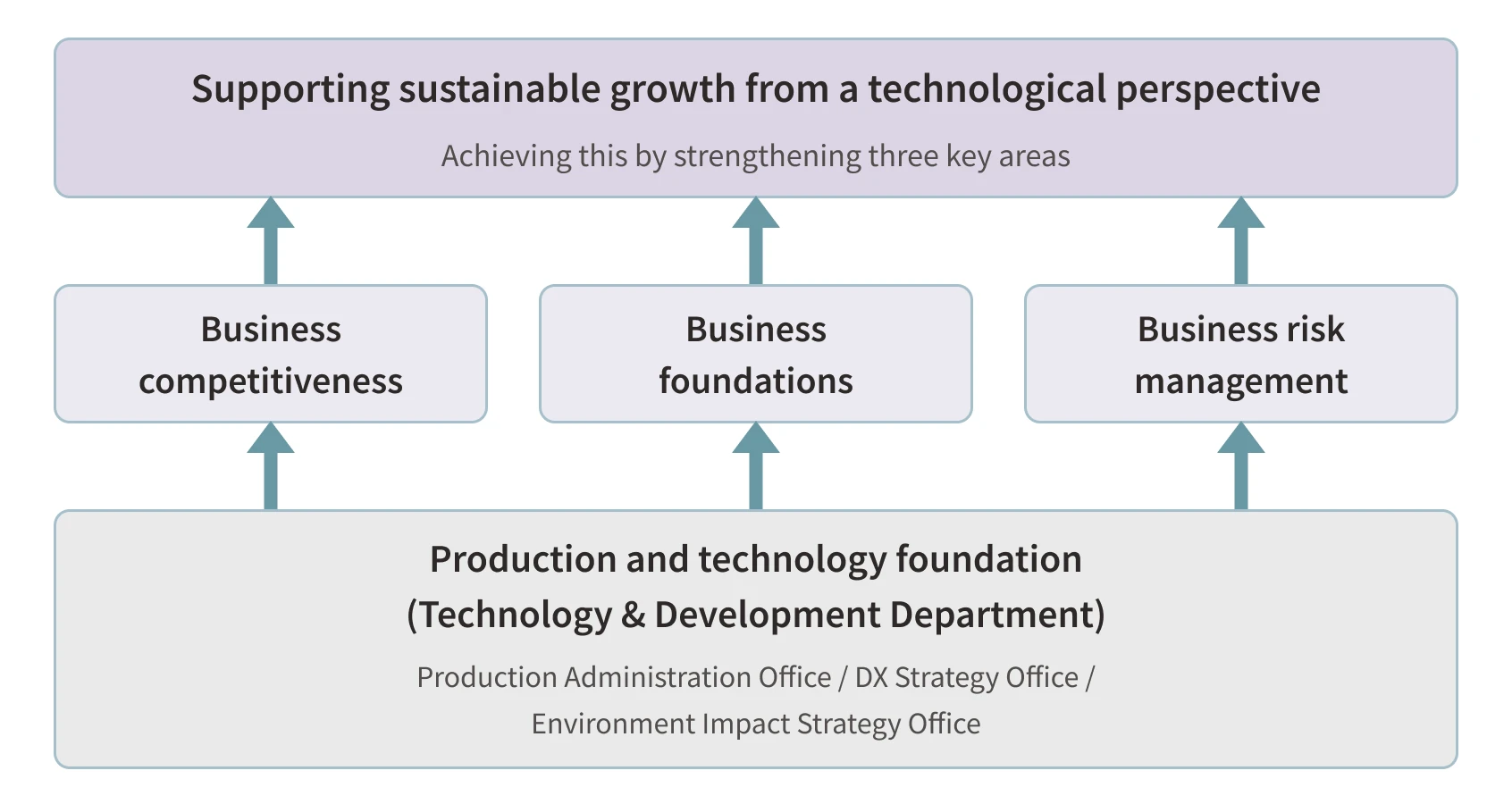
The Technology & Development Department reorganized its structure in April 2026 and is pursuing new value creation unconstrained by conventional frameworks as the production and technology foundation supporting manufacturing process innovation. With the strengthening of “business competitiveness,” “business foundations,” and “business risk management” as its three core pillars, the department is developing technologies to enhance global competitiveness while strengthening risk management in priority areas such as legal and regulatory compliance, quality, occupational safety, cybersecurity, and chemical substance management. Through these efforts, it supports sustainable growth from a technological perspective.
Initiatives in Automation and Labor Saving, DX/AI Utilization, and Environmental Technology Development
To further advance its manufactured capital, the Gunze Group is promoting the following initiatives, with a focus on automation and labor saving, the utilization of DX and AI, and environmental technology development.
Improving productivity through automation and labor saving
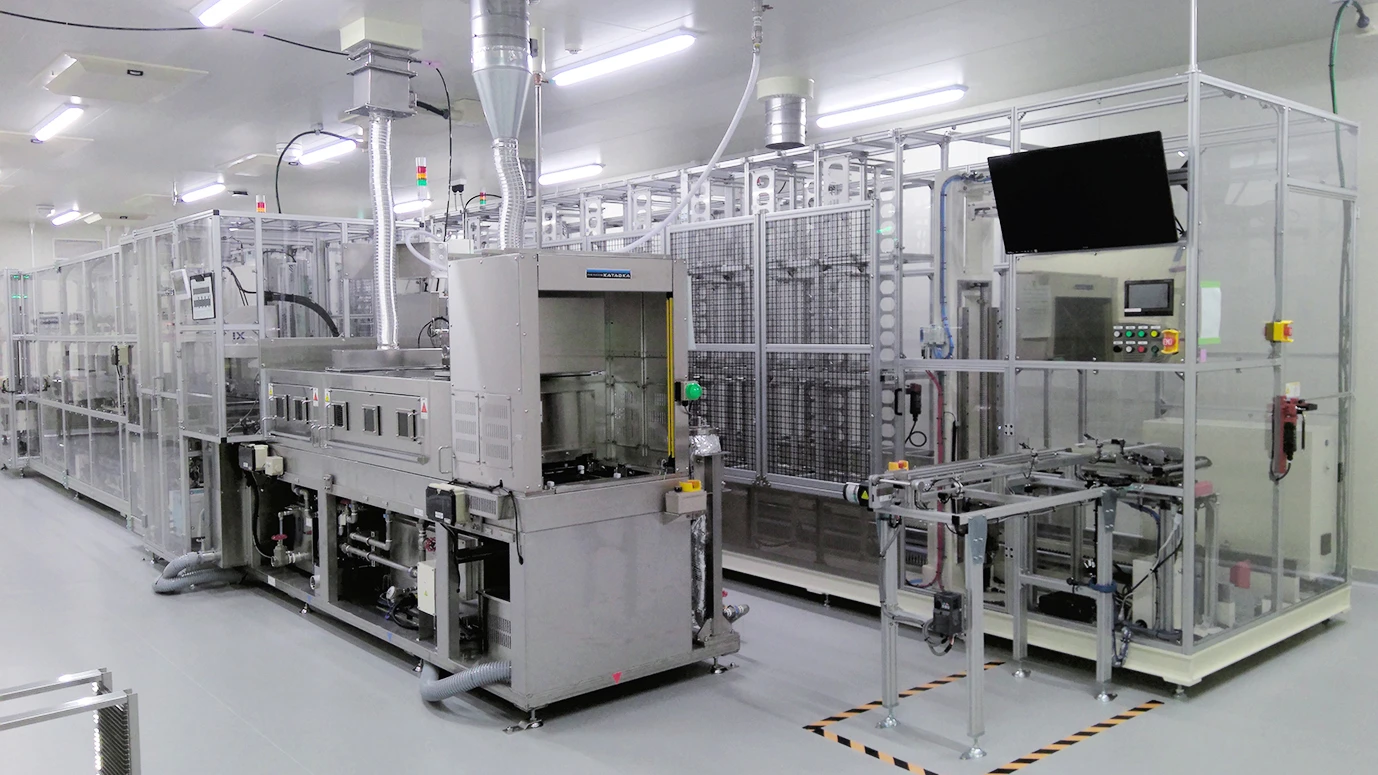
To address labor shortages and the need to transfer skills, we are automating processes that have traditionally relied on manual work. For the bonding and sewing line for apparel products, we developed the “Smart Line,” an automated line combining handling, sensing, image processing, and other technologies. By deploying the elemental technologies established through this initiative to existing equipment, we achieved a 34% improvement in efficiency in certain processes. We are also extending these technologies to the Medical Business, one of our growth areas, to improve production process efficiency and stabilize quality. By partially automating previously labor-dependent processes and linking them into continuous operations, we are enhancing supply capacity and quality stability while strengthening our manufacturing technologies through the cross-business application of technology.
Automated production line at the Ayabe Medical Plant
Transforming operations through DX and AI
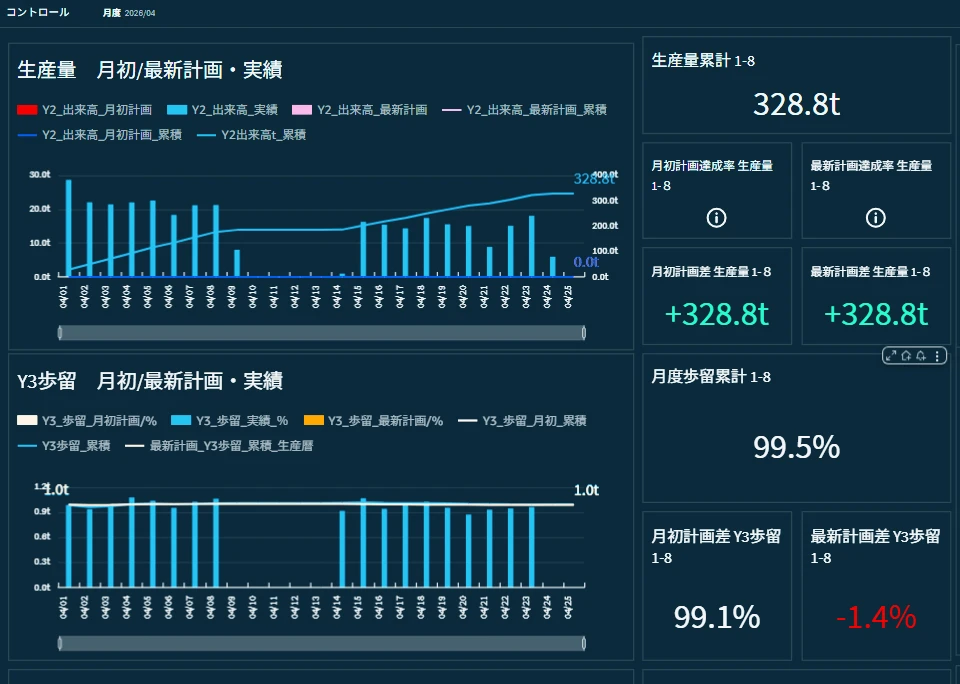
Through the use of DX and AI, we are visualizing business processes and production conditions and encouraging a shift toward a “self-solving” approach, in which each employee uses data to identify issues and make improvements. In production, starting with the optimization of production planning, we are advancing the sophistication of SCM as a whole by linking procurement, production, logistics, and sales. By integrating and visualizing information on demand trends, inventory levels, production capacity, and other factors, we are improving inventory turnover and equipment utilization while reducing stockout rates. In equipment maintenance, we are also digitizing and accumulating inspection records and failure histories and establishing mechanisms that enable the knowledge of experienced personnel to be shared and utilized. Through these efforts, we are developing smart maintenance systems that help prevent unplanned shutdowns, improve maintenance efficiency, and facilitate the transfer of technical expertise.
Production management using DX (illustration)
Promoting resource circulation through environmental technology development
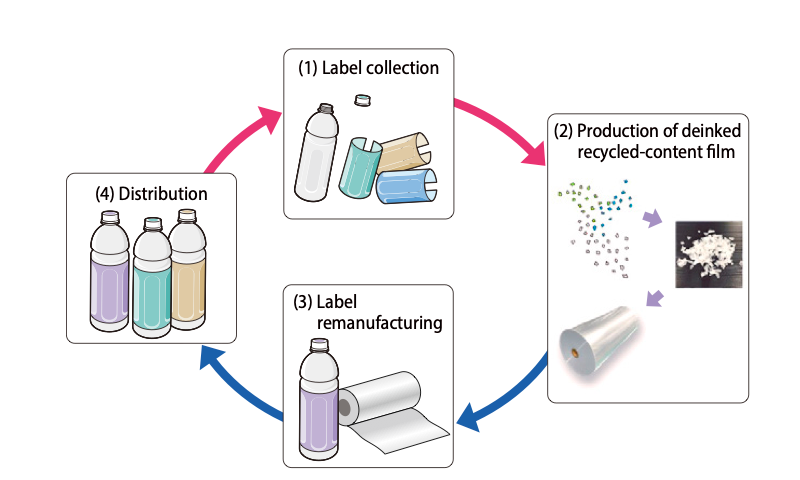
In environmental technology development, we regard reducing environmental impact as an investment in sustainable growth and are advancing the development of proprietary technologies. One example is the Engineering Plastics Division, which has established a closed-loop recycling system for organic solvents, generating profits through internal resource circulation. In the plastic films field, we have also established de-inking technology that removes ink components from recovered label scrap, enabling closed-loop recycling into shrink labels. In addition, we are promoting initiatives to reduce and reuse resources, accelerating the transition to resource-circulating manufacturing. Through these initiatives, the Gunze Group will simultaneously improve productivity, stabilize quality, and reduce environmental impact, while further advancing its manufactured capital to support sustainable growth.
Label-to-label horizontal recycling process
Strengthening Intellectual Capital to Support New Value Creation
Fundamental Technologies of the Gunze Group
The Gunze Group positions “fiber processing technology,” “resin processing technology,” and “manufacturing technology × equipment development” as its fundamental technologies and regards the technologies it has accumulated over the years as an important form of intellectual capital. Each business division actively promotes product and technology development based on customer needs while working to further advance its proprietary technologies. At the corporate level, the Technology & Development Department and the Research & Development Department strengthen fundamental technologies from a Company-wide, medium- to long-term perspective. The Technology & Development Department promotes cost structure reform, more advanced production processes, and energy reform through the use of DX and other advanced technologies, while the Research & Development Department works to create new differentiated technologies. Through these initiatives, we are continuously strengthening the Gunze Group’s intellectual capital by accumulating technologies and know-how as well as R&D results, while also developing human resources.
Strengthening Intellectual Capital through R&D
The Research & Development Department conducts R&D on raw materials and processing technologies, centered on three laboratories aligned with the Group’s fundamental technologies and core business fields: the Functional Materials Laboratory, Medical Device Materials Laboratory, and Fiber & Textile Laboratory. In addition to conducting R&D on differentiated technologies that offer originality and competitive advantage, each laboratory is taking on the challenge of creating product portfolios for new fields by leveraging its research results and collaborating with external partners.
The Functional Materials Laboratory is integrating and further advancing the resin processing technologies cultivated over the years while conducting R&D on the design of composite materials using high-performance resins and on molding and processing technologies. The Medical Device Materials Laboratory conducts R&D and application development involving bioabsorbable materials and related processing technologies, with the aim of creating high-value-added products that meet the needs of medical professionals. The Fiber & Textile Laboratory is further advancing the fiber processing technologies accumulated over the years and actively conducting R&D on high-performance fibers for industrial applications as well as apparel applications.
In these R&D activities, we are promoting cross-organizational collaboration within the Group while expanding collaboration with companies, universities, and research institutions to build a more effective and efficient R&D framework. Through these activities, we are strengthening the intellectual capital that supports sustainable value creation by accumulating technologies and expertise, including differentiated technologies, while also enhancing our research talent and external collaboration networks.
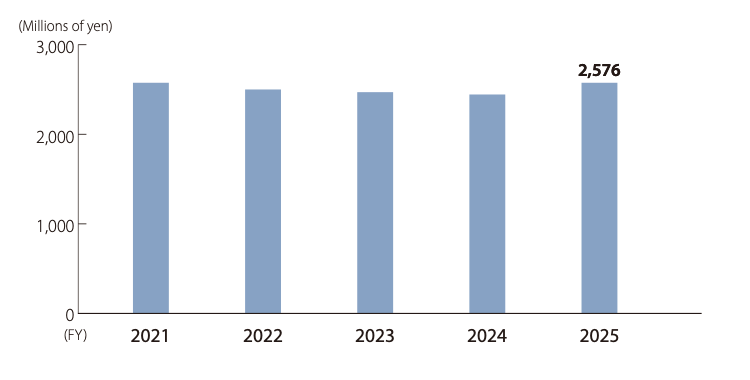
Gunze Group R&D expenditures
Intellectual Property Activities that Drive Business Value: DPO System × IP Mix
Intellectual Property Development Initiatives
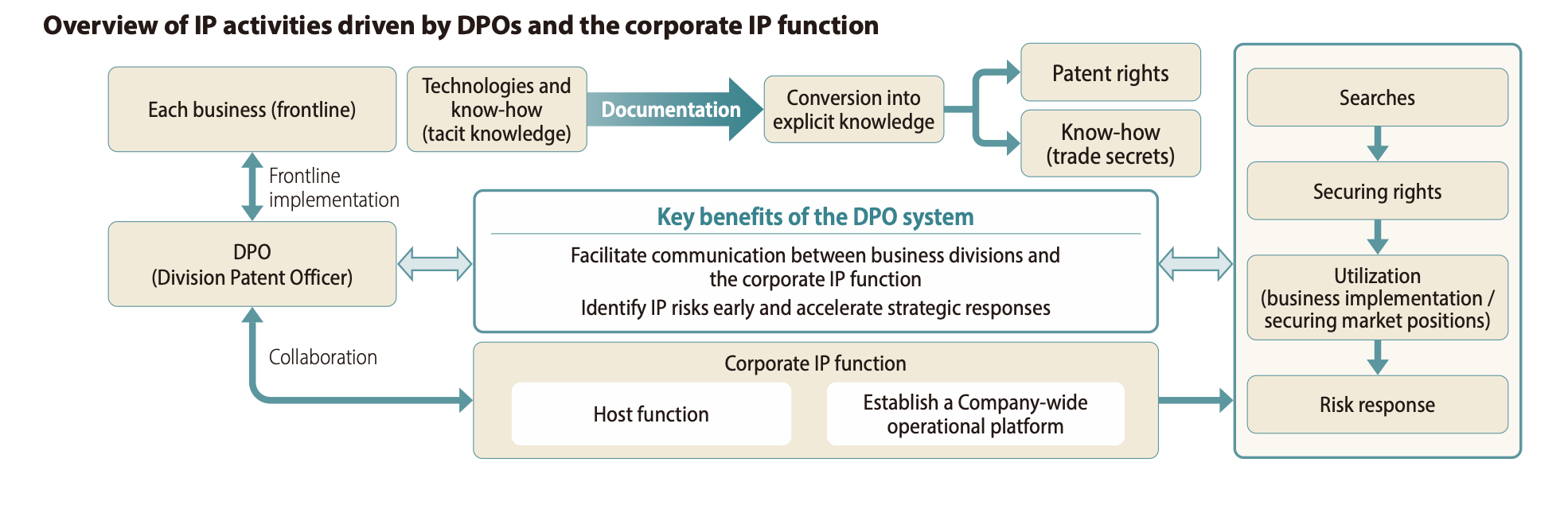
The Gunze Group’s intellectual property strategy focuses on building mechanisms to manage intellectual assets cultivated in each business, including technologies and know-how, across the Group as intellectual property directly linked to business value, and to put them in a form that can be effectively utilized. Tacit knowledge in the workplace is documented and converted into explicit knowledge in the form of patent rights and know-how (trade secrets). The IP & Legal Department serves as the host department, establishing a Company-wide operational platform and consistently driving activities ranging from research and securing rights to utilization, including business implementation and securing market positions, as well as risk management.
To make these mechanisms effective, Gunze is systematically strengthening both decision-making and IP rights strategy. Specifically, development managers in each business division are appointed as DPOs (Division Patent Officers) to facilitate communication and procedures between the intellectual property function and frontline operations. This framework also enables prompt and appropriate decision-making in situations requiring business judgment, such as approving patent applications and responding to infringement.
In addition, Gunze is thoroughly implementing an IP Mix tailored to the characteristics of each business, building competitiveness through multifaceted protection that combines designs, trademarks, and know-how with patents. Going forward, we will further strengthen efforts to develop intellectual property for priority technologies and product groups that address societal needs such as resource circulation (reducing environmental impact), transformation of manufacturing processes through digital technologies (labor saving and greater efficiency), and safety and security. Our focus will shift from the Apparel Business toward the Functional Solutions Business and Medical Business, which are growth businesses. At the same time, we will accelerate decision-making on bringing these technologies and products to market and investing in priority areas, while promoting external collaboration, enhancing competitiveness, and driving business growth.
Number of patents, designs, and trademarks held by the Gunze Group (domestic and overseas)