Climate Change Response

Environmentally Considerate Products

Gunze's CO₂ emissions reduction targets

Category FY2030
CO₂ emissions reduction
in Scope 1 and 2
35% or more reduction
compared to FY2013
More details
Sustainability promotion structure

1. Governance As an organization tasked with reviewing and deliberating on basic policies and implementation measures related to sustainability, we have established a Sustainability Committee chaired by the Director or Executive Officer in charge of sustainability, with heads of head office departments and business divisions serving as members. In addition, to establish a system for preventing and managing risks that may arise within the Gunze Group and to ensure a swift response to any risks that do occur, we have established a Risk Management Committee chaired by the Director or Executive Officer in charge of compliance, with the heads of key departments at headquarters serving as members. Furthermore, to achieve sustainable growth in corporate value, we have incorporated the degree of achievement of the company-wide CO₂ emissions reduction target into executive compensation.

Governance Structure for Promoting Sustainability
Roles of committees and organizations in sustainability promotion
Committees and organizations Roles
Board of Directors Monitors the progress of measures to address sustainability issues, including issues pertaining to the environment, particularly climate change, as well as human capital and other topics as discussed and decided during business execution
Executive Committee Discuss and decide on important management issues and key operational matters related to sustainability challenges affecting the entire corporate group (including environmental issues centered on climate change and issues related to human capital, among others)
Sustainability Committee
(As a general rule convened once per quarter)
Discusses and makes decisions on basic and response policies as they pertain to sustainability
Risk Management Committee
(As a general rule convened once per quarter)
Discussions regarding the occurrence of sustainability-related risk events, measures that have been or are planned to be taken, and risk prevention
Main Departments in Charge Promote initiatives to address sustainability issues and identify risks and opportunities (Environmental Impact Strategy Promotion Office: environmental issues with a focus on climate change; Personnel & General Affairs Department: human capital of the Gunze Group, etc.)

2. Risk management Sustainability-related risks, response measures, and opportunities are reviewed by the department primarily responsible for each topic and shared with the relevant business divisions and other head office departments.
The business divisions and head office departments work together to develop and implement response measures, while the department primarily responsible reports to the Sustainability Committee and Risk Management Committee.
Important sustainability issues are then reported by these committees to the Corporate Officers’ Meeting and subsequently to the Board of Directors, enabling the Gunze Group to integrate and manage risks across the Group.

3. Strategy We selected the plastic films field and apparel business (innerwear) as the Gunze Group’s main businesses for scenario analysis, and we identified short- to long-term risks, studied countermeasures, and for these, extracted considerations and opportunities.
We conducted analysis in response to the 1.5°C target since this has become the global target. Specifically, we have formulated two scenarios that reference reports issued by governments and international organizations. These include the decarbonization scenarios (1.5°C scenario) such as the NZE2050*1 presented in the IEA World Energy Outlook and the warming progression scenarios (4°C scenario) based on the IPCC AR5 RCP8.5 scenario*2. The two scenarios are analyzed based on transition risks toward a decarbonized economy and physical risks associated with the progression of global warming. The Gunze Group will continue to revise its scenario analysis to improve its strategies.

*1 NZE2050 (Net Zero Emissions by 2050): One of the scenarios presein the IEA’s World Energy Outlook 2020. It is a 1.5°C scenario that surpasses the target of the Paris Agreement and aims for zero CO₂ emissions by 2050.
*2 RCP8.5 scenario: A scenario in Figure SPM6 of the summary for government policymakers of Synthesis Report (SYR) of the IPCC Fifth Assessment Report (AR5), which forecasts a temperature increase of 2.6°C to 4.8°C by 2100.

Responding to Climate Change related Risks and Opportunities
Risk items Risks Period Degree of financial impact Plastic films field Innerwear field Responding to Risks and Opportunities
Transition risk
(1.5℃)
Coal prices Emissions trading and carbon taxes introduced in many countries, increasing operating costs Medium to long term Large ○ ○ Risk response:
Reduce the financial impact of carbon taxes by increasing investment in renewable energy and shift- ing to low-carbon energy sources
Plastics regulations in various countries Raw material prices increased due to stricter regulations prompting the introduction of bio-materials and recycled materials Medium to long term Large ○ ○ Risk response:
Establish technologies that break down and reuse waste plastic and provide products that meet customer needs
Changes in energy mix (electricity prices) Higher ratio of renewable energy to electric power has driven up electric- ity prices Medium to long term Small ○ ○ Risk response:
Use of equipment with low power consumption; promote the installation of self-consumption solar power generation
Price shifts in key commodities Manufacturing costs for crude oil-de- rived synthetic fibers has increased Medium to long term Large ○ Risk response:
Promote a shift from petroleum-derived to green materials
Changes in customer behavior More consumers are making purchasing decisions in line with their environmental impact Medium to long term Medium ○ Risk response:
Increase sales of environ- mentally responsible products for ethical consumption
Physical risks
(4℃)
Abnormal weather Lower sales due to business activity suspensions and supply chain disruptions caused by wind and flood damage Short to medium term Medium ○ ○ Risk response:
Enhance supply chain disaster prevention at manufacturing sites and in logistics to strengthen business continuity capabilities
Rising temperatures
(volume of cotton cultivation)
Cotton prices up due to rising temperatures Medium to long term Medium ○ Risk response:
Develop bio-materials and Risk response: Develop biomaterials and recycled materials
Rising temperatures - Medium to long term Medium ○ ○ Opportunity:
Products that address rising temperatures. (shrink films, innerwear) Strengthened sales
  • Time period: Short term 1-2 years, Medium term 3-5 years, Long term 6-10 years
  • Financial impact in 2050:Small = less than 100 million yen, Medium = 100 million yen to 1 billion yen, Large = 1 billion yen or more

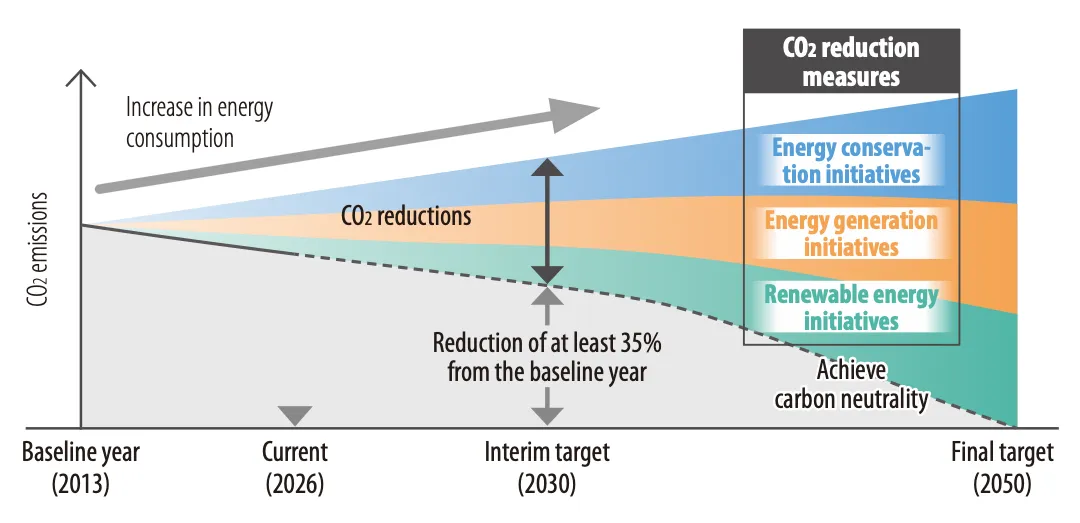
4. Indicators and targets To steadily reduce CO₂ emissions in line with our targets, we are strengthening initiatives across our business activities, including energy conservation, energy generation, and the use of renewable energy, while also advancing resource circulation and measures to reduce environmental impact. Based on the Basic Policy for Plastic Resource Circulation established in 2019, we are actively promoting the 3Rs + Renewable*3, developing new resource recycling technologies, and expanding their application to apparel and all other business segments. As another key Group initiative, we are strongly promoting the Circular Factory Plan, which aims to establish resource circulation in the plastic films field. In connection with financing through a green loan, the Circular Factory Plan received the highest rating of Green 1 (F) from Japan Credit Rating Agency, Ltd. (JCR) for its conformity with the Green Bond and Loan Principles and Guidelines. At the time the rating was obtained, the Circular Factory Project*4 under this framework was the first initiative in Japan to receive an assessment covering an entire resource circulating factory initiative. The funds raised through the green loan have also been used for initiatives to reduce CO₂ emissions, in addition to the Circular Factory Project. These include the construction of the office building at the Konan Plant in Aichi Prefecture, completed in February 2023, which received a five-star BELS*5 rating and ZEB*6 certification.

Gunze’s roadmap to achieving carbon neutrality

*3 3R+Renewable: “3R” refers to the three Rs—Reduce (reducing the amount of resources used in manufacturing products and minimizing waste generation), Reuse (reusing products or their components after they have been used), and Recycle (effectively utilizing waste as raw materials or energy sources)—and this concept is expanded by adding “Renewable” (renewable use).
*4 Circular Factory Project: A factory project to achieve resource circulation without generating waste by developing products suitable for recycling in the plastic film business, establishing re-materialization technology, and reusing waste plastics.
*5 BELS: Building-Housing Energy-efficiency Labeling System. A system that objectively evaluates the energy efficiency of buildings and displays the results using a five-star rating scale.
*6 ZEB: Net Zero Energy Building. A building designed to achieve a net-zero balance in primary energy consumption.

CO₂ Reduction Results and Future Direction

1. Results for Scope 1 and 2*7 In fiscal year 2025, CO₂ emissions from Scope 1 and 2 were reduced by 42.7% compared to fiscal year 2013, driven by a decrease in apparel production, a switch to a new electricity provider, and the proactive promotion of energy-saving initiatives. This exceeded the fiscal year 2025 target of “a reduction of at least 29% compared to fiscal year 2013,” and the following initiatives contributed significantly to this result.
・Promoting daily energy-saving activities by visualizing energy losses using an EMS (Energy Management System)
・Continuing to repurchase the environmental value of in-house FIT*8 solar power generation facilities in Fukushima, Utsunomiya, and Konan
・Installing solar power generation facilities at new offices and factories
Moving forward, we will continue to actively promote initiatives aimed at further increasing the proportion of renewable energy, including the expansion of solar power generation facilities to overseas offices and the introduction of next-generation solar power generation facilities.
On the other hand, the actual energy intensity stood at 104.2% of the previous year’s level—due in part to a decline in efficiency resulting from reduced production—and thus fell short of the target (99.0% of the previous year’s level). Going forward, we will further strengthen our energy management and energy-saving initiatives using our EMS, while also implementing energy-saving measures that incorporate digital transformation (DX) technologies such as IoT and AI across the entire process chain, including product design, production, and logistics.
We are also actively developing products that address the risks and opportunities identified through scenario analysis. In the plastic film sector, under the GEOPLAS® brand, we began sales of GEOPLAS® HCR1 in December of last year. This product incorporates de-inked*9 raw materials obtained through horizontal recycling of label scrap. Additionally, Asedoron, a product in the apparel sector that addresses discomfort using our proprietary sweat-management technology, has surpassed cumulative shipments of 3 million units, thanks in part to the effectiveness of our functional branding.

*7 Scope 1 and 2 emissions are calculated for all Gunze Group facilities, both domestic and overseas
*8 FIT: Abbreviation for “Feed-in Tariff,” a system under which electric power companies purchase electricity generated from renewable energy sources at a fixed price set by the government for a specified period
*9 De-inking: The process of removing ink and adhesive components from printed film and other materials

2. Scope 3 results Compared to Scope 1 and 2, Gunze’s Scope 3 emissions are significantly higher. Focusing on the Plastic Company and Apparel Company—which account for a large portion of these emissions—we are prioritizing company-wide resource recycling and sustainable procurement as approaches to Category 1 (purchased products and services) and Category 12 (disposal of sold products). In fiscal year 2024, Scope 3 emissions increased by 4,782 metric tons of CO₂ (1.2%) compared to the previous fiscal year due to an increase in business activity resulting from business growth. Although we are making steady progress in reducing emissions on a per-unit basis, this progress has not yet been sufficient to fully offset the impact of business growth. Moving forward, we will further accelerate our resource recycling initiatives centered on the Plastic Company’s Circular Factory and focus on improving reduction efficiency to achieve the decoupling of business growth and CO₂ emissions.
For the climate change section o CDP *10 questionnaire, we received a C rating (compared to a “B” rating in FY2024). In FY2026, we will focus on improving areas that need attention and aim to achieve a B rating.

*10 CDP: A nonprofit organization that operates a global system for environmental disclosure by companies and local governments, in response to requests from global institutional investors and others concerned with environmental issues such as climate change.

CO₂ Emissions Result(Scope1・2・3)
FY 2025 FY 2024 Compared to FU2024 Compared to FY2013
Emission volume
(t-CO₂)
Emission Volume
(t-CO₂)
Reduction Volume
(%)
Reduction Volume
(%)
Scope1+2 98,910 108,457 8.8% 42.7%
Scope1 28,547 31,056 8.1% 45.4%
Scope2: Market Criteria 70,364 77,400 9.1% 41.5%
Scope2: Location Criteria 72,786 74,392 2.2% 42.9%
Scope3 382,151 395,637 3.4% -
  • Scope 1 and 2 are calculated for all Gunze Group business sites in Japan and overseas (Scope 2 calculation is based on market criteria)
  • Scope 3 is calculated for all Gunze Group business sites in Japan.

The Gunze Group’s Environmental Technologies and Initiatives

Responding to climate change (saving energy, creating energy, and using renewable energy) ・ Reducing energy loss through the introduction of energy management systems (EMS)
・ Improving the efficiency of boilers, air conditioners, and other utility equipment
・ Saving energy through new buildings with airtight and thermal insulation (acquire ZEB and CASBEE*11 certification)
・ Systematically installing solar power generation systems
・ Shifting to low CO₂ emission fuels (from heavy oil to LPG and electrification)

*11 CASBEE (Comprehensive Assessment System for Building Environmental Efficiency): A methodology for comprehensively evaluating and grading building quality, encompassing environmental considerations such as energy conservation and the use of materials with low environmental impact, as well as factors like indoor comfort and landscape considerations. Buildings are ranked on a five-tier scale. The Housing and Building SDGs Promotion Center, a general incorporated foundation, operates the “CASBEE Evaluation Certification System,” a third-party certification program.

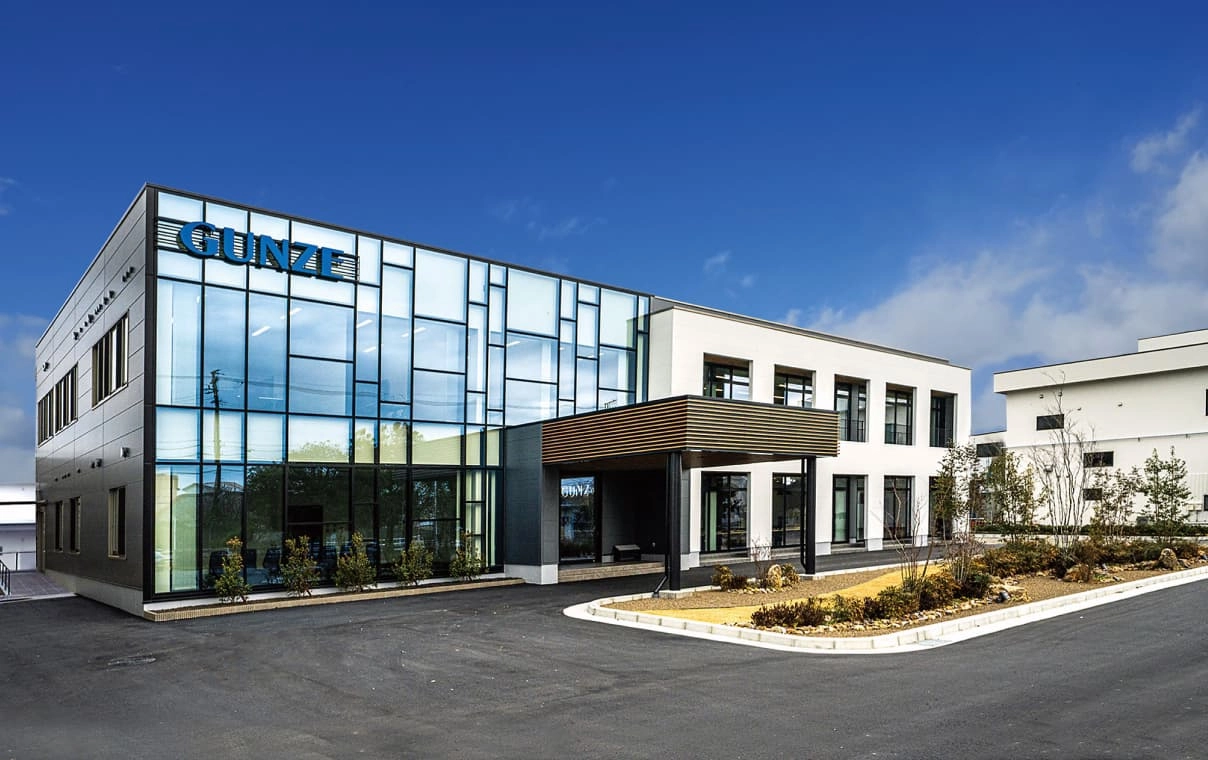
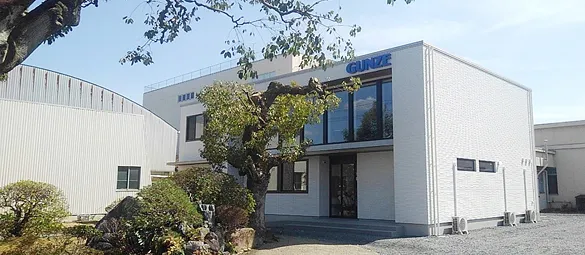
Introducing the Konan Plant’s ZEB Office*12 Building (Konan City, Aichi Prefecture)
(Engineering Plastics Business) Reflecting our desire and ideas to create comfort for customers and a fulfilling and comfortable work environment for employ- ees, a new office building was completed to serve as the face of the plant in February 2023.
The former office was a historic building completed in 1959. In light of the issues that continued to emerge as a result of age, there was an urgent need to secure and expand space to accommodate the expanding scale of business and the variety of products handled. To expand the production area, we therefore decided to consolidate the conference rooms and offices in the plant building and reconstruct the office building. In addition to consolidation, our goal was to also create a facility that was stylish, comfortable, and environmentally friendly.
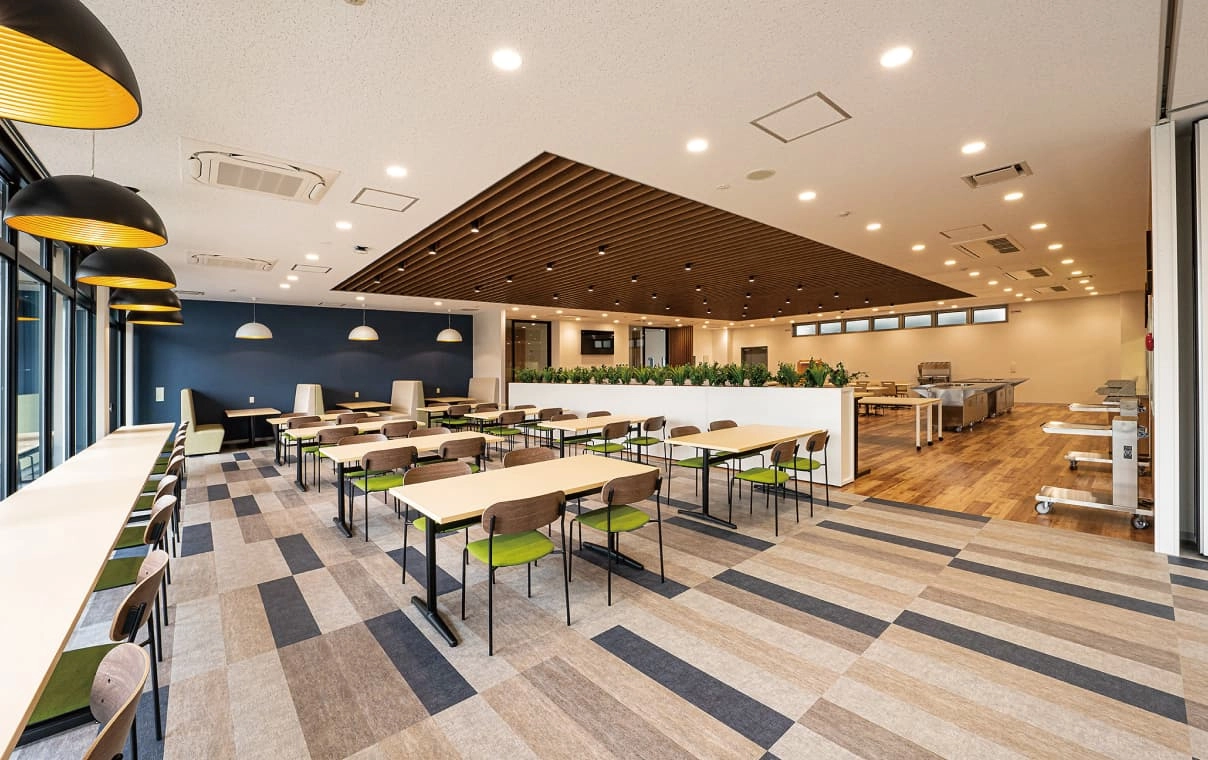
A fusion of the past and present with an exterior that showcases the features of Gunze’s historical buildings, the architectural design also incorporates such accents as dimmable lighting and wood grain to create comfortable, pleasant spaces. In addition to improving convenience and comfort, there was a focus on renovating the dining hall. Ingenious efforts were made to make dining a relaxing and enjoyable experience, including offering a variety of seating styles and menus produced in collaboration with famous restaurants. Moreover, the layout was designed to enable its double use for casual meetings and other functions, which help improve communication among employees. In terms of environmental friendliness, we also incorporated a variety of energy-saving measures and were thus able to obtain ZEB certification.
By having a new office that incorporates various design features and measures, we devised a way to boost employee motivation.
We hope that our customers will understand Gunze’s corporate stance, and that the implementation of environmentally responsible management will lead to the sustainable growth of business.

*12 A building design that aims to reduce the balance of primary energy consumed by the building to zero. Having achieved a 102% reduction in standard primary energy consumption (energy saving 53%, energy creation 49%), the new office building at the Konan Plant was awarded the highest ZEB certification rating.

The Konan Plant’s ZEB office building

The Konan Plant’s ZEB office building

Producing comfortable and pleasant spaces

Producing comfortable and pleasant spaces

Engineering Plastics Division

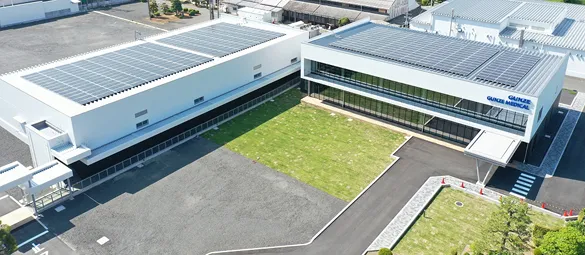
In addition to Engineering plastics field, ZEB-certified offices and factories have been completed in the Medical and Apparel business as well.

Rendering of the new Medical facility

Medical Office Building and Plant No. 3

Completion: April 2025
Certified as a ZEB and awarded a CASBEE rating of B+ or higher
(CASBEE: Comprehensive Assessment System for Building Environmental Efficiency; a method for evaluating and rating buildings based on their environmental performance)
Visit the Gunze Medical Co., Ltd. Website
Tsuyama Plant Office

Tsuyama Plant Office

Completion: March 2026
ZEB Ready (57% energy reduction achieved)
(ZEB Ready: A certification awarded to buildings that have reduced their baseline primary energy consumption by 50% or more solely through “energy-saving technologies,” such as improving building insulation and installing high-efficiency equipment like LED lighting and energy-efficient air conditioning systems.)
Visit the Textile Materials Site

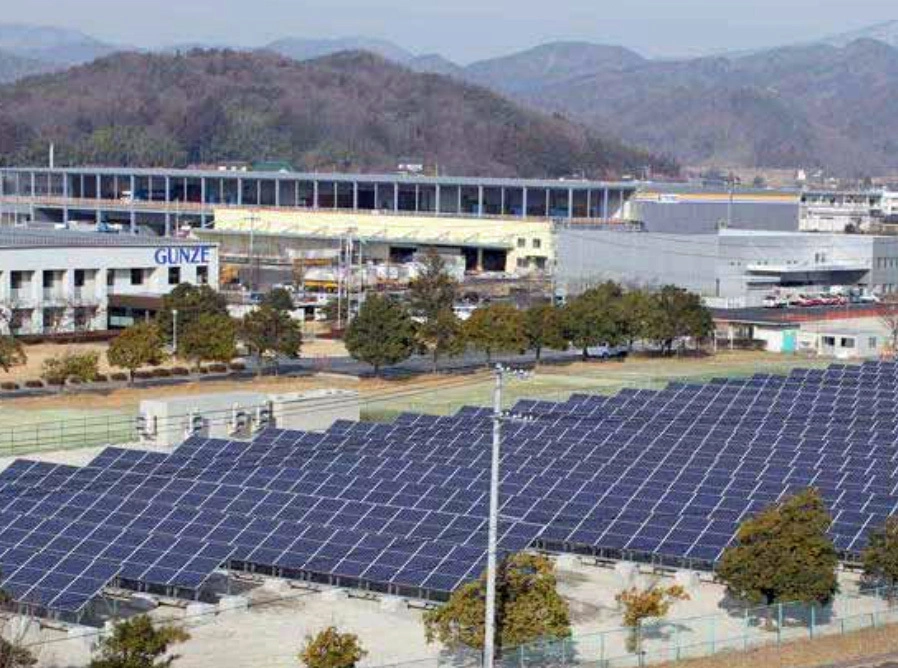
Reduce CO₂ Emissions through the Use of Renewable Energy In addition to reducing the environmental impact of its operations, Gunze is vigorously working to reduce CO₂ emissions by expanding the use of renewable energy. The renewable energy currently being used is solar power generation. At our sites in Motomiya City, Fukushima, Konan City, Aichi, and Shimotsuke City, Tochigi, the company has installed solar power generation systems that use the FIT to generate "environmental value" = non-fossil certificates with tracking*13, which we then buy back and use to decarbonize our own operations. In addition, at the Circular Factory in Moriyama City, Shiga Prefecture, scheduled for completion in 2023, solar panels have been installed on the entire roof of the building, and the electricity generated will be used as part of the plant's power supply. As a result of these facilities and other measures, the current percentage of renewable energy used by our company is approximately 5% in terms of domestic Scope 1 and 2.
In addition, to further improve this weight, the company plans to introduce solar power generation equipment at the new plant under construction in Konan City, Aichi, and the new plant in Ayabe City, Kyoto. We will also continue to consider introducing new technologies for solar panels (such as making them lighter) at other sites where it is difficult to install them.

*13 Non-fossil certificates with tracking: The value of electricity produced from renewable energy sources is securitized. The certificates are given a unique number that allows them to be tracked as they are traded and used, preventing double counting.

Fukushima Solar Power Station

Fukushima Solar Power Station

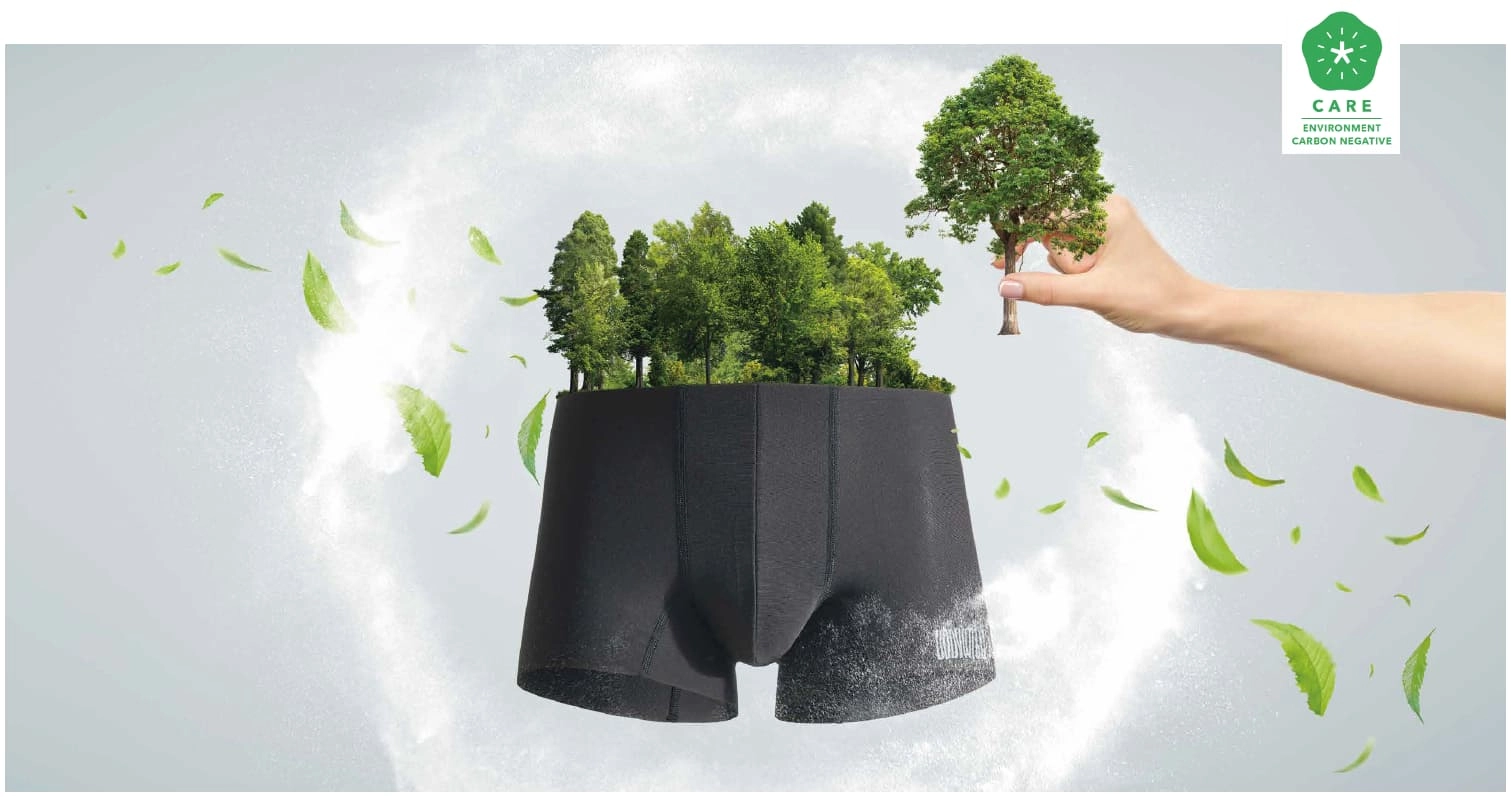
Carbon Negative Products Designed to Contribute to Both CO₂ Reductions and Sales Our joint industry-academia project with the Center for Urban Research, Kyushu University, has shown that the amount of CO₂ absorbed and fixed in the landscaping and greening business exceeds the amount of CO₂ emitted during the production of BODY WILD “3D-MADE Boxers” and “Cutoff™ Boxers” products sold as part of the apparel business. As a result, these products received CARE Certification*14 from the Japan Institute of Metrology and Sustainability, an independent organization, thereby allowing us to commercialize these as carbon negative products that help improve the environment.

*14 CARE Certification: The world’s first initiative to use a visual format as a means of indicating whether products and services appropriately consider the labor and natural environments during their production processes. CARE Certification includes both human rights and environmental frameworks, where Gunze has acquired CARE Certification under the environmental framework.

action-env-sdg-1
More details

ESG Finance Guided by our founding principle of “Starving for harmonious coexistence with all stakeholders surrounding the company through a people-oriented approach and a commitment to quality,” we have always valued contributing to society with a strong sense of sustainability.
In our new mid-term management plan, “VISION 2030 stage1,” we have established “Environmentally Conscious Management” as one of our core strategies. We will further strengthen company-wide initiatives to reduce environmental impact through our business activities.
In advancing these initiatives, we will actively utilize ESG Finance *15 for necessary funding and enhance the transparency of our activities through reporting and other measures.

*15 ESG Finance: A financing method where funds are exclusively allocated to investments that contribute to solving environmental (E), social (S), and governance (G) issues.

Green Finance Framework We plan to invest ¥12 billion in environmental initiatives by 2030. To implement green finance for these purposes, we have established the following Green Finance Framework *16.
Regarding third-party evaluation of compliance with green bond loan principles and guidelines, we have received an evaluation from Japan Credit Rating Agency, Ltd. (hereinafter, JCR) and obtained “Green1 (F)”, the highest rating in the “JCR Green Finance Framework Evaluation”.
Furthermore, at the time of obtaining this evaluation, the “Circular Factory Project” under this framework was the first initiative in Japan to obtain an evaluation for its entire resource recycling factory initiative.
Nomura Securities Co., Ltd. was selected as the structuring agent to support green finance through advising on the formulation of the framework and obtaining third-party assessments.

*16 Green Finance Framework: This document outlines our policies regarding: (1) the use of funds raised through green finance; (2) the project evaluation and selection process; (3) the management of funds raised; and (4) reporting, based on the Green Bond/Loan Principles/Guidelines.

Green General Syndicated Loan To secure the necessary funds for projects such as the construction of a circular factory, we have concluded a Green General Syndicated Loan*17 agreement in accordance with the Green Finance Framework, with Mitsubishi UFJ Bank, Ltd. acting as the arranger.

*17 Green General Syndicated Loan: A loan provided by a syndicate of financial institutions, including new financial institutions, based on a single agreement. The use of the funds raised is limited to investments that contribute to solving environmental issues.

Green General Syndicated Loan Overview

Contract Date September 30, 2022
Arranger/Agent Mitsubishi UFJ Bank, Ltd.
Lenders (in alphabetical order) Oita Bank
Shiga Bank
National Credit Union Federation
Tsukuba Bank
Nanto Bank
Total Amount 4.5 billion yen
Loan Term October 5, 2022 to October 5, 2026 (4 years)
Use of Funds Circular Factory Project (Moriyama Plant):
Construction of a building certified with CASBEE A
Installation of new lines with improved energy efficiency
Green Building:
Construction of an office building at the Konan Plant certified with BELS 5 stars and ZEB

Reporting (Japanese Only) We will publish the allocation status of funds and environmental improvement effects annually until the procured funds are fully repaid.